Emergency Preparedness and Safety Planning
Prepare Before the Emergency Happens.
Emergencies rarely happen according to plan. Your response should.
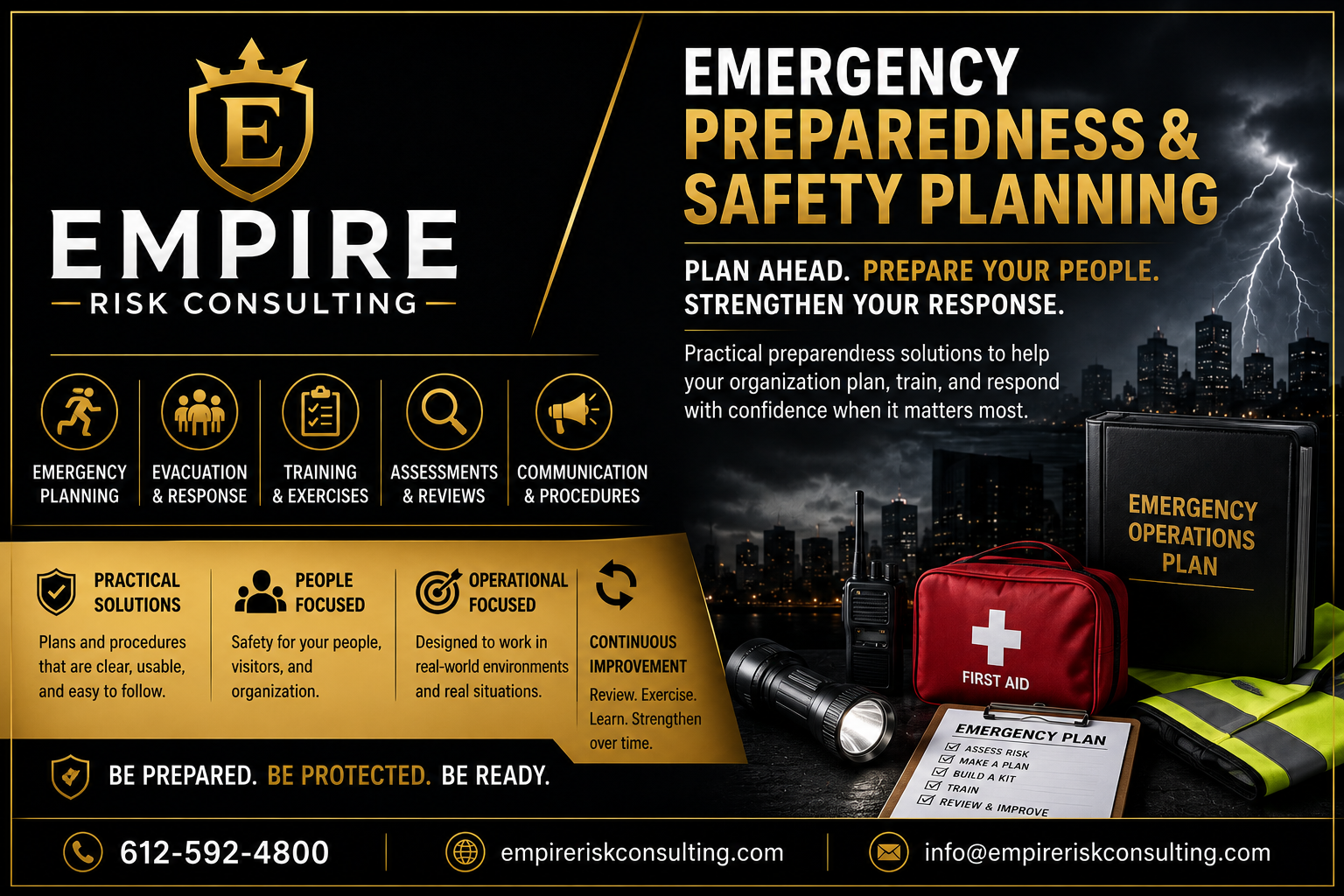
Empire Risk Consulting helps businesses, organizations, facilities, and event teams develop practical emergency plans, safety procedures, training, and response systems designed for the people and environments where they will actually be used.
From emergency action planning and evacuation procedures to exercises, communication protocols, and preparedness assessments, we help turn uncertainty into a clear plan of action.
Practical plans. Prepared people. Stronger response.
Why Preparedness Matters
Preparedness Is More Than Having a Plan
A Plan on Paper Isn't Enough.
Emergency preparedness is not simply having a document stored in a binder or shared drive. A strong preparedness program gives people clear direction, defined responsibilities, reliable communication, and practical procedures they can use when normal operations are disrupted.
Emergencies can take many forms—from severe weather, fire and medical incidents to workplace violence, utility failures, security concerns, evacuations and other unexpected disruptions.
The objective isn't to predict every possible scenario.
It's to build an organization that knows how to respond when something goes wrong.
Empire Risk Consulting works with organizations to identify vulnerabilities, strengthen existing procedures, close preparedness gaps, and develop practical systems appropriate for their people, facilities and operations.
Preparedness should answer five critical questions:

Identify realistic hazards, vulnerabilities and operational risks.

Establish clear procedures for response, evacuation, sheltering and other protective actions.

Define roles, responsibilities, leadership and decision-making authority.

Create reliable methods for notifying employees, visitors, leadership and emergency responders.

Use training, drills and exercises to identify weaknesses before an actual emergency exposes them.
The goal is not a thicker emergency plan. The goal is a more prepared organization.
Because during an emergency, the time to figure out the plan has already passed.
What We Help You Prepare For
Prepared for the Situations That Can Disrupt Your Organization
Every organization faces a different combination of risks. Effective preparedness means having clear procedures for the situations most likely to affect your people, facilities, and operations.
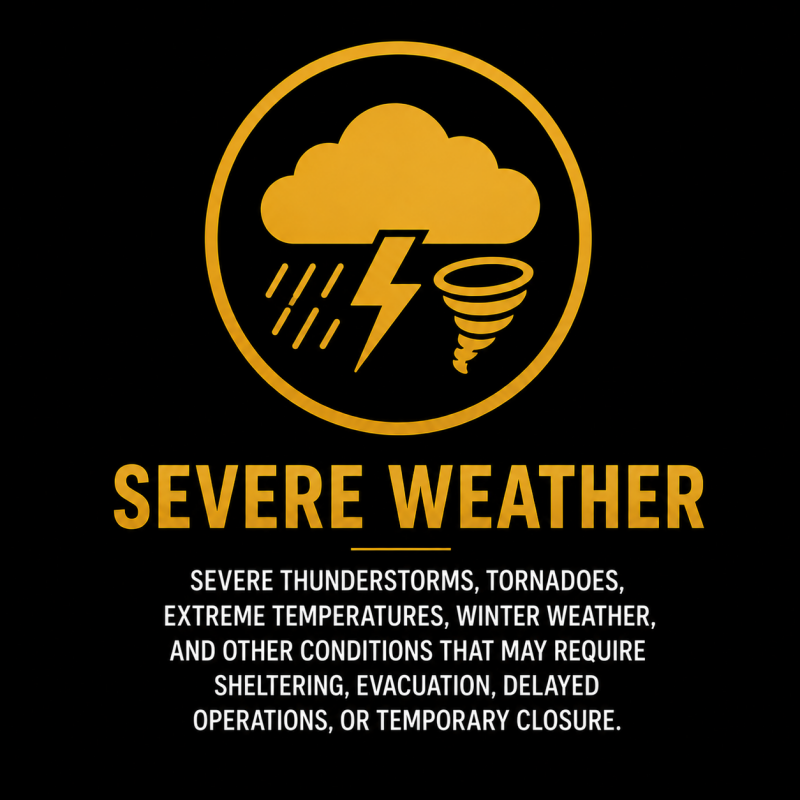
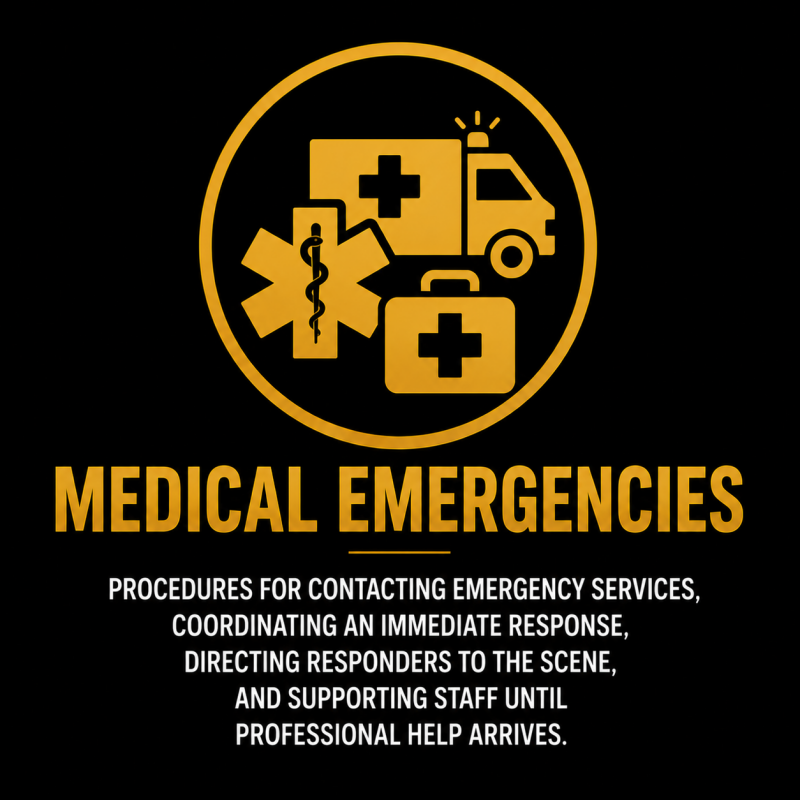
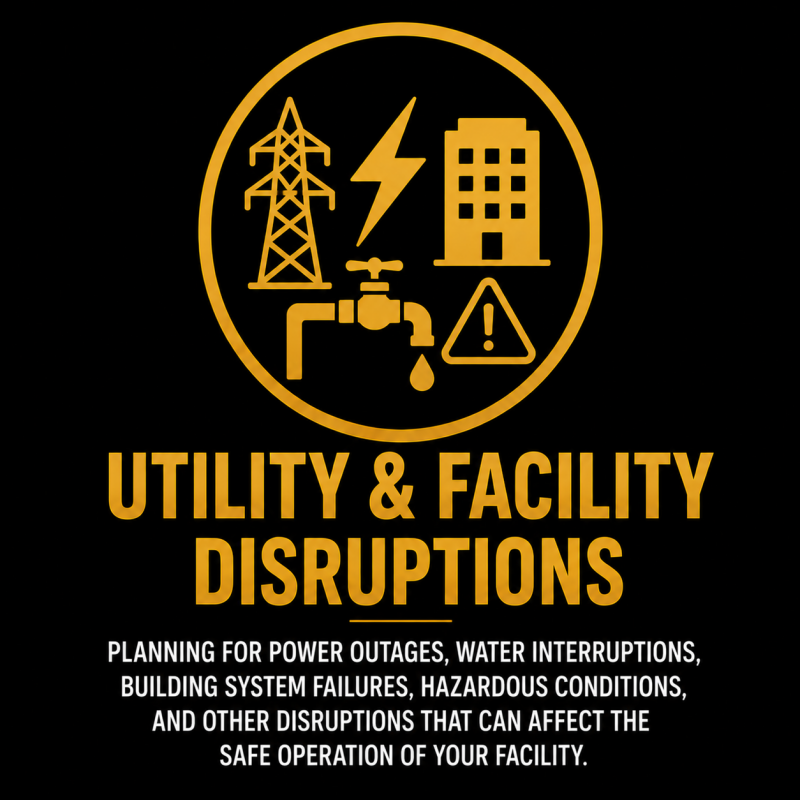
Empire Risk Consulting helps organizations prepare for a wide range of emergencies and operational disruptions, including:

You may not be able to predict the next emergency. You can prepare your organization to respond to it.
Emergency Preparedness & Safety Planning Services
Practical Preparedness Built Around Your Organization
Emergency preparedness isn't one-size-fits-all. The right program depends on your facility, people, operations, risks, responsibilities, and existing capabilities.
Empire Risk Consulting provides practical planning and preparedness support that can be tailored to a specific need or combined into a more comprehensive preparedness program.
You can't predict every emergency. You can prepare to respond.
01 — EMERGENCY PREPAREDNESS & RESPONSE PLANS
Build a clear framework for responding when normal operations are disrupted.
Customized emergency planning can establish response priorities, leadership responsibilities, communication procedures, protective actions, accountability considerations and continuity priorities.
02 — RISK & PREPAREDNESS ASSESSMENTS
Understand vulnerabilities before they become emergencies.
We review your environment, operations and existing procedures to identify preparedness gaps, potential hazards and practical opportunities for improvement.
03 — EVACUATION & SHELTER-IN-PLACE PLANNING
Give people clear direction when they need to move—or when they need to stay.
We help develop practical evacuation and shelter-in-place procedures addressing routes, assembly areas, accountability, responsibilities, communication, and protective actions appropriate to your organization.
04 — EMERGENCY COMMUNICATION & LEADERSHIP PROCEDURES
Create clarity when communication and leadership matter most.
We help establish notification procedures, leadership responsibilities, escalation pathways, communication expectations, and practical command structures so your team understands who is responsible for what during an emergency.
05 — Training, Exercises & Preparedness Support
Turn the written plan into something your people understand and can use.
We help strengthen readiness through emergency procedure orientations, tabletop discussions, drills, exercises, and preparedness-focused training tailored to your organization and its needs.
06 — Plan Reviews & Continuous Improvement
Keep your preparedness program current as your organization changes.
We review existing plans and procedures to identify outdated information, operational gaps, unclear responsibilities, and opportunities to strengthen preparedness over time.
PREPAREDNESS IS MORE THAN A DOCUMENT.
A strong preparedness program connects planning, people, communication and decision-making—giving your organization a practical framework to rely on when normal operations are disrupted.
The Empire Preparedness Approach
Preparedness works best when it is practical, organized, and built around how your organization actually operates.
Rather than starting with a generic template, Empire Risk Consulting takes a structured approach to understanding your environment, identifying priorities, developing practical procedures, preparing your people, and strengthening the program over time.
The objective is simple: build preparedness that works in the real world—not just on paper.

STEP 1 — Assess
Understand Your Environment
Effective planning begins with understanding what already exists.
We look at your organization, facility, operations, people, existing procedures, and potential hazards to develop a clearer picture of your current preparedness and where vulnerabilities or gaps may exist.
Key focus:
People • Property • Operations • Existing Plans • Hazards • Capabilities
STEP 2 — PRIORITIZE
Focus on What Matters Most
Not every risk carries the same likelihood, consequence, or operational impact.
We help determine which preparedness needs deserve the greatest attention so leadership can focus resources and planning efforts where they can have the greatest practical value.
Key focus:
Critical Risks • Essential Operations • Vulnerabilities • Response Priorities
STEP 3 — PLAN
Build Clear, Practical Procedures
Once priorities are understood, they need to become actionable.
We help develop procedures that define protective actions, responsibilities, communication, accountability, decision-making, and continuity considerations appropriate to your organization.
Key focus:
Procedures • Responsibilities • Communication • Protective Actions • Continuity
STEP 4 — PREPARE
Turn the Plan Into Readiness
A plan becomes valuable when the people expected to use it understand what it means for them.
We help organizations communicate procedures, clarify responsibilities, familiarize personnel with expectations, and use appropriate training or exercises to strengthen preparedness.
Key focus:
Awareness • Training • Exercises • Leadership • Team Readiness
STEP 5 — Improve
Keep Getting Better
Preparedness isn't finished when the plan is written.
Organizations change, risks evolve, and exercises or real-world events can reveal opportunities for improvement. Reviewing those lessons helps keep plans relevant and strengthens readiness over time.
Key focus:
Review • Lessons Learned • Updates • Corrective Actions • Continuous Improvement
Who We Support
Preparedness for Different Organizations & Environments
Emergency preparedness looks different depending on the people, environment, operations, and risks involved. Empire Risk Consulting adapts planning and preparedness strategies to the realities of each organization rather than relying on a one-size-fits-all approach.
Businesses & Workplaces
Emergency planning and preparedness support for small and growing businesses, offices, service organizations, and other workplace environments.
Nonprofit & Community Organizations
Practical preparedness planning for organizations serving their communities, operating programs, coordinating volunteers, or managing public-facing activities.
Events, Festivals & Public Gatherings
Preparedness planning for fairs, festivals, community celebrations, special events, and other environments involving large groups of people, temporary operations, and multiple stakeholders.
Professional & Service Organizations
Emergency procedures and preparedness support for organizations where employee safety, client services, communication, and continuity of operations are important.
Existing Plans & Preparedness Programs
Already have a plan? Existing emergency plans, procedures, and preparedness programs can be reviewed and strengthened as operations, facilities, personnel, and risks change.
Building Preparedness from the Ground Up
For organizations without a formal preparedness program, Empire can help establish the foundational plans, procedures, responsibilities, and tools needed to get started.
Not Sure Where Your Organization Fits?
That's okay.
Preparedness planning should start with your actual environment and needs, not with fitting your organization into a predefined category.
Tell us about your organization, facility, event, or preparedness concern, and we'll help determine an appropriate next step.
Plans People Can Actually Use
Plans Should Work When People Are Under Pressure
An emergency plan has little value if it's too complicated to understand, difficult to access, or unclear about what people are actually supposed to do.
Empire Risk Consulting focuses on developing preparedness materials that are organized, practical, and usable by the people responsible for carrying them out.
Depending on the needs and scope of the engagement, preparedness materials may include:
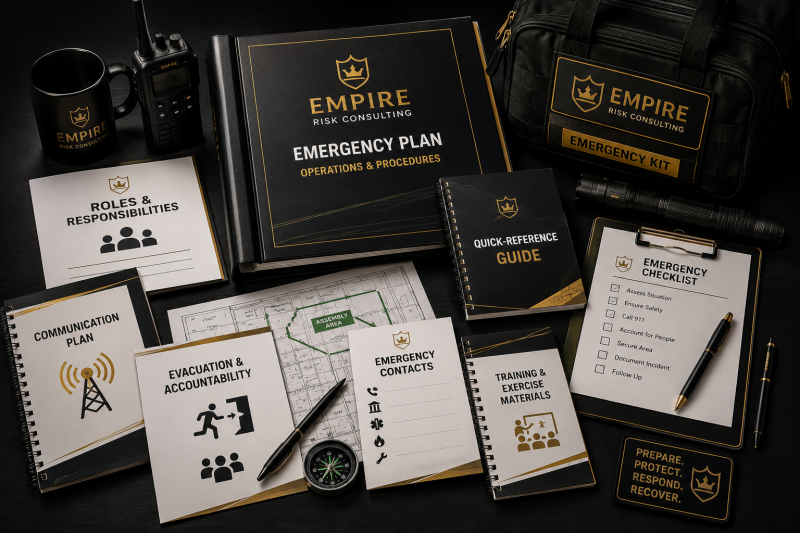
Emergency Plans & Procedures
Written plans outlining emergency actions, responsibilities, communication procedures, evacuation or sheltering processes, and other organization-specific response information.
Quick-Reference Guides
Condensed emergency instructions designed to give employees, supervisors, or leadership fast access to critical information when time matters.
Emergency Checklists
Simple action-oriented checklists that help personnel remember critical steps during specific emergency situations.
Roles & Responsibility Guides
Clear identification of who is responsible for key actions such as calling emergency services, making notifications, directing evacuation, accounting for personnel, or coordinating with responders.
Emergency Communication Procedures
Defined communication and notification processes identifying who communicates what, to whom, and through which method during an incident.
Evacuation & Accountability Materials
Procedures and supporting materials for evacuation, assembly locations, personnel accountability, visitor considerations, and re-entry or all-clear processes.
Emergency Contact & Resource Information
Organized contact information for internal leadership, emergency services, facility contacts, vendors, utilities, or other resources relevant to the organization's emergency procedures.
Training & Exercise Materials
Materials that can support employee orientations, drills, tabletop exercises, scenario discussions, and post-exercise reviews.
The goal isn't to create the longest emergency plan.
It's to create the right information, in the right format, so people can find it and use it when they need it.
Preparedness Doesn't End When the Plan Is Finished
Organizations change. People change. Facilities change. Operations change. And the risks an organization faces can change with them.
An emergency plan that made sense several years ago may no longer reflect current personnel, responsibilities, contact information, facility layouts, procedures, or operational realities.
That's why preparedness should be treated as an ongoing process—not a one-time project.
Plans Should Be Reviewed When Things Change
Consider reviewing your emergency plans and procedures following:
- Changes in leadership or key personnel
- Facility moves, renovations, or layout changes
- Significant changes in operations or services
- New programs, events, or organizational activities
- Changes to emergency contacts or communication systems
- Drills, exercises, or tabletop discussions
- An actual emergency or significant incident
- Identified gaps, concerns, or lessons learned
- Extended periods without a formal plan review
Learn From What Happens
Drills, exercises, and real incidents can reveal things that aren't always obvious when a plan is written.
What worked?
What caused confusion?
Were responsibilities clear?
Did communication work?
Were there unexpected challenges?
Those lessons can then be used to strengthen procedures, update plans, and improve future readiness.

Plan. Practice. Review. Improve.
Empire Risk Consulting can support organizations not only in developing preparedness plans, but also in reviewing and strengthening them as needs evolve.
Preparedness isn't about achieving a permanent state of “ready.” It's about building an organization that continues to prepare, learn, and improve.
Why Empire Risk Consulting?
Preparedness Built Around Real Operations
Emergency preparedness isn't just about writing a document. It's about understanding how people, facilities, communication, responsibilities, and operations come together when normal conditions suddenly change.
Empire Risk Consulting approaches preparedness from a practical operational perspective—developing plans and procedures intended to make sense before, during, and after an emergency.
Practical, Usable Planning
Plans are developed for the people who actually have to use them.
We focus on clear procedures, defined responsibilities, accessible information, and practical actions rather than unnecessary complexity.
Customized to Your Environment
Your emergency plan should reflect your organization.
Facility layout, staffing, visitors, operations, communication systems, available resources, and organizational responsibilities can all influence preparedness planning.
We start by understanding those realities rather than simply inserting your organization's name into a generic template.
Operations-Focused Perspective
Emergency procedures have to work alongside normal operations.
We consider how people move, communicate, make decisions, account for others, coordinate responsibilities, and maintain essential functions when normal operations are disrupted.
Preparedness Beyond the Binder
A written plan is only one part of readiness.
Training, drills, tabletop exercises, quick-reference materials, communication procedures, and periodic reviews can help turn a written plan into an active preparedness program.
Continuous Improvement
Preparedness should evolve with your organization.
Exercises, incidents, organizational changes, and lessons learned can all identify opportunities to strengthen plans and procedures over time.
Clear, Collaborative Process
You know your organization. We bring the planning structure.
Effective preparedness requires collaboration. We work with organizational leadership and appropriate stakeholders to understand the environment, identify priorities, and develop practical solutions together.
PRACTICAL. CUSTOMIZED. OPERATIONAL.
Preparedness built around your organization—not around a template.
Frequently Asked Questions
Common Questions About Emergency Preparedness & Safety Planning
Let’s Strengthen Your Preparedness
Not sure where to start? That’s okay.
Whether you need to develop an emergency plan, review existing procedures, prepare your team, address a specific concern, or strengthen your overall preparedness program, start by telling us what you’re working on.
We’ll discuss your organization, current preparedness needs, and what you’re trying to accomplish to determine an appropriate next step.
You don’t need to have the solution figured out before reaching out.
Prefer to Talk First?
Call: 612-592-4800
Email: info@empireriskconsulting.com
Request a Preparedness Consultation
Complete the form below with some basic information about your organization and preparedness needs. We’ll review your request and follow up regarding next steps.
Submitting this form does not create a consulting engagement. We’ll contact you to discuss your request, scope, availability, and next steps.